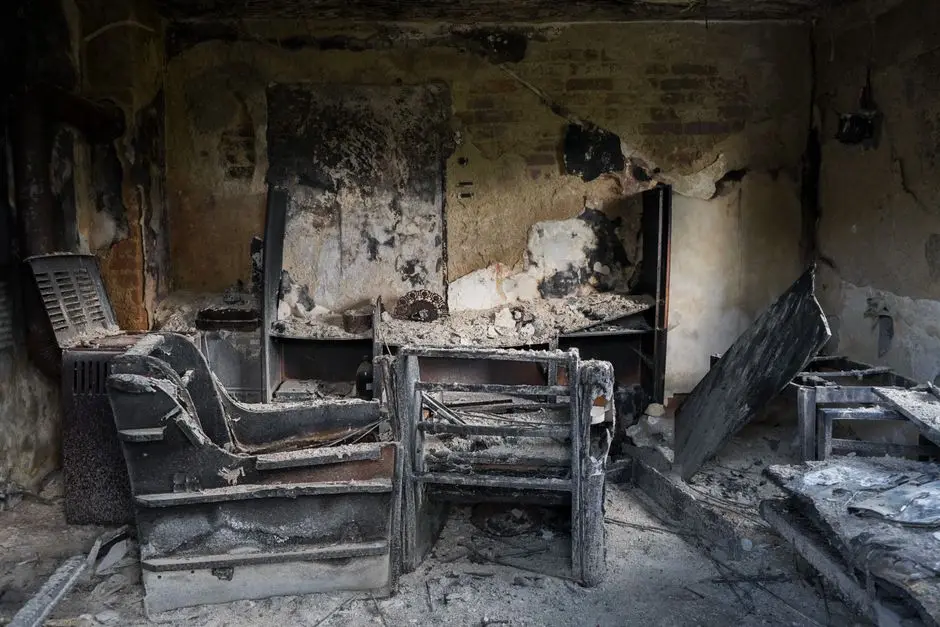
Your house still smells like smoke after a fire because soot particles and volatile organic compounds from burned materials have soaked into porous surfaces - drywall, insulation, carpet, upholstery, and HVAC ducts - and those particles keep releasing odor for weeks or months. Airing out the rooms and wiping down counters does not reach the residue that settled inside wall cavities and ductwork. This article explains why smoke odor persists after a fire in Pinon Hills, California, where it hides, how long it lasts, and what actually removes it.
Why smoke odor lingers after a fire
Smoke odor after a fire is not a single smell - it is a mixture of hundreds of chemical compounds created when wood, drywall, plastic, insulation, and synthetic fabrics burn at different temperatures. The compounds that smell strongest are the same ones that stick hardest to surfaces: phenols from wood, aldehydes from plastics, and tiny carbon particles that carry those chemicals deep into materials.
When we walk a fire-damaged home in Pinon Hills, the smell is usually strongest in one of three places: the room where the fire started, the rooms directly above it, or any room connected by the HVAC system. That pattern tells us where the residue traveled. Heat pushes smoke upward and outward, and the air handler pulls it through return ducts into every room the system serves.
Two things keep the odor alive long after the flames are out. First, soot particles are small enough to penetrate drywall paper, wood grain, and fabric weave - once inside, they are not coming out with a sponge. Second, those particles off-gas. Every time humidity rises or the furnace kicks on, they release more odor into the air. That is why a house can smell fine on a dry afternoon and terrible the next morning.
How long does smoke smell last after a fire in Pinon Hills?
Smoke smell lasts two to eight weeks in a lightly affected home with good ventilation and immediate cleaning, but it can persist for six months or longer if soot reached insulation, ductwork, or wall cavities. In Pinon Hills, the high-desert climate actually works against you: low humidity dries out residue and makes it airborne again, while the strong afternoon winds push odor through the house every day.
We have seen homes in the Mountain Road Corridor where the fire was contained to one bedroom, yet the smell lingered for months because the return duct pulled smoke into the attic and it settled into the blown-in insulation. No amount of opening windows fixed that. The insulation had to be removed and the ductwork cleaned.
Three factors determine how long the smell lasts:
- How long the smoke sat before cleaning. Residue that sits for more than 72 hours bonds to surfaces and becomes much harder to remove.
- What burned. Synthetic materials - foam, plastic, treated wood - produce a sharper, longer-lasting odor than clean wood.
- Whether the HVAC system ran after the fire. Every hour the system ran pushed more soot into ducts and every room it serves.
The hidden places smoke odor hides in your home
Smoke odor hides in the spaces you cannot see: inside wall cavities, above ceiling tiles, behind baseboards, under flooring, inside cabinet boxes, and throughout the HVAC system. We find it in the same places over and over in Pinon Hills homes.
HVAC ducts and air handler
The return duct is the single most common reason a house still smells like smoke months after a fire. Soot coats the inside of the ductwork, and every time the system runs, it blows that odor back into the living space. The blower wheel and evaporator coil collect residue too. Cleaning the ducts without cleaning the air handler leaves half the problem behind.
Insulation and wall cavities
Attic insulation, especially loose-fill cellulose or fiberglass, acts like a sponge for smoke particles. Once contaminated, it cannot be cleaned - it has to be removed and replaced. The same is true for insulation inside exterior wall cavities. We often find that the drywall looks clean but the cavity behind it still smells strongly.
Porous furnishings and building materials
Upholstered furniture, mattresses, curtains, carpet padding, and even unfinished wood furniture absorb odor. So do unpainted drywall, ceiling texture, and grout. These materials need either deep cleaning with the right chemistry or replacement. For items that can be saved, we use fire-damaged furniture restoration PINON HILLS techniques that pull residue out of fabric and wood rather than just masking it.
Why DIY smoke odor removal often fails
DIY smoke odor removal fails because household cleaners cannot reach the residue that is causing the smell. You can scrub every visible surface and still smell smoke, because the source is inside the walls, ducts, or insulation. We see this constantly when homeowners call us after two or three weeks of trying.
The most common DIY mistakes:
- Using vinegar or baking soda bowls. These absorb some surface odor but do nothing for residue inside cavities or ducts.
- Running the HVAC system to "clear the air." This spreads soot deeper into the ductwork and every room the system serves.
- Painting over smoke-stained walls. Paint traps odor for a few weeks, then the smell bleeds through. Without a shellac-based primer, the stain and odor return.
- Ozone generators used incorrectly. Ozone can be effective in trained hands, but running one in an occupied home is a health risk and often does not reach wall cavities anyway.
- Throwing away furniture too soon. Many pieces can be saved with proper cleaning. Others cannot, but guessing wrong costs you money either way.
If you have already tried the DIY route and the smell is still there, the residue is almost certainly in a place you cannot see. That is when it makes sense to bring in a team that has moisture meters, thermal cameras, and duct inspection tools.
How professional smoke odor removal works
Professional smoke odor removal works by finding every source of residue, removing it physically, and then treating the air and surfaces to neutralize what remains. It is a multi-step process, not a single treatment. Here is what we do in Pinon Hills homes.
Step 1: Locate the source
We use thermal imaging and moisture meters to trace where smoke traveled. We check the attic, crawlspace, ductwork, and wall cavities. We also test the HVAC system to see how far soot spread. This step determines the entire scope of work.
Step 2: Remove soot and residue
Different surfaces need different methods. Dry soot on walls comes off with specialized sponges and HEPA vacuums. Greasy soot from kitchen fires needs a degreaser. We use soot removal PINON HILLS techniques matched to the surface so we do not damage drywall, wood, or metal while cleaning.
Step 3: Clean or replace porous materials
Insulation, carpet padding, and heavily contaminated drywall get removed and replaced. Furniture, curtains, and clothing get cleaned with the right chemistry. We use smoke damage restoration PINON HILLS methods that separate items that can be saved from items that cannot.
Step 4: Treat the air and surfaces
After physical removal, we use hydroxyl generators, thermal foggers, or ozone - depending on the situation - to neutralize remaining odor molecules. We also seal exposed wood framing with a shellac-based sealer where needed. This is the step that most DIY attempts skip entirely.
Step 5: Verify
We do not call a job done until the smell is gone on a hot afternoon with the HVAC running. That is the real test. If odor returns, we find out why and fix it.
Common mistakes homeowners make after a fire
The biggest mistake homeowners make after a fire is waiting to call for help. Every day that passes lets residue bond deeper into surfaces and spread further through the HVAC system. We have seen small kitchen fires turn into whole-house odor problems because the homeowner waited two weeks to call.
Other mistakes we see in Pinon Hills:
- Not documenting damage before cleaning. Your insurance adjuster needs photos and an inventory. Cleaning before documenting can reduce your claim.
- Assuming the smell will go away on its own. It rarely does. Smoke odor that lasts more than a week is a sign that residue is trapped somewhere.
- Using the wrong cleaning products. Some products set stains or spread soot. Always test in a hidden area first.
- Ignoring the attic and crawlspace. Smoke rises and settles. If you do not check those spaces, you will miss a major odor source.
- Hiring a general cleaner instead of a restoration company. Smoke odor removal requires specialized equipment and training. A maid service is not equipped for this work.
If you are dealing with a fire in a rental property, the process is different. We handle tenant fire damage cleanup PINON HILLS regularly, and we know how to work with landlords, renters, and insurance carriers to get the unit back to rentable condition.
When to call a professional
Call a professional when the smoke smell lasts more than a week, when you can smell it in rooms far from the fire, or when the HVAC system was running during or after the fire. Those are the three signs that residue has moved into hidden spaces. If you are in Pinon Hills and any of those apply, our team at Fire Damage Restoration Pinon Hills can inspect your home and give you a clear scope of work.
We also get called when a homeowner has already tried cleaning and the smell keeps coming back. That is usually a sign that the source is in the ductwork or insulation. We can confirm that in about an hour with the right tools.
If you are not sure whether you need help, call us anyway. We would rather tell you the smell is surface-level and give you a few tips than have you spend weeks fighting a problem that needs professional equipment.
Frequently Asked Questions
Why does my house still smell like smoke after a fire in Pinon Hills?
Smoke odor lingers because soot particles and chemical compounds have soaked into porous materials like drywall, insulation, carpet, and ductwork. In Pinon Hills, low humidity and strong winds can make the odor worse by drying out residue and pushing it back into the air. Surface cleaning does not reach these hidden sources.
How do I get rid of smoke smell in my house in Pinon Hills California?
Start by removing surface soot with a HEPA vacuum and dry sponges, then clean hard surfaces with a degreaser. But if the smell persists more than a week, the source is likely in the ducts, insulation, or wall cavities. At that point, professional smoke odor removal is the fastest path to a clean-smelling home.
How long does smoke smell last after a fire in Pinon Hills?
In a lightly affected home with immediate cleaning, smoke smell can last two to eight weeks. If soot reached the HVAC system, attic insulation, or wall cavities, it can last six months or longer without professional treatment. The high-desert climate in Pinon Hills can extend that timeline.
Who can remove smoke odor in Pinon Hills?
Fire Damage Restoration Pinon Hills specializes in smoke odor removal for homes and businesses in Pinon Hills, California. We use thermal imaging to find hidden residue, clean or replace contaminated materials, and treat the air with professional-grade equipment. Call (833) 929-6186 for an inspection.
Get help with Fire Damage Restoration in PINON HILLS
If your house still smells like smoke after a fire, the residue is somewhere you cannot see - and it will not go away on its own. We find it, remove it, and verify the air is clean before we leave. Call Fire Damage Restoration Pinon Hills at (833) 929-6186 to schedule an inspection.